Creating Beyond the Beyond
New workflows and tools for unlocking a path to finishing.
Producing Beyond the Beyond was a labour of love. But finishing it was actually the hardest part. I can’t quite remember why I decided to make a record - it might have been the realisation of how long it had been since I “finished” my last record or seeing the last time I uploaded something to Soundcloud. I’ve been tinkering away for years, making half-finished tracks, quarter-finished tracks, well nothing was ever actually finished.
I read an article on a music production blog that argued that finishing electronic music, and more specifically the tension between what you gain by playing and creating music through the art of exploring, vs the need to finish was simply a pull being driven by capitalism.
And in a way, reading that article helped me justify how I felt about exploring and playing with music. Find something of interest, get lost in pushing it around and shaping it in different ways for a while. Then put it down and move on to something else - either in life or come back next week and tinker with a new thing. Why does a hobby need gratification from anyone else?
Finishing something to a level of completeness demands an entirely different approach. When you’re exploring for fun, you’re not saying anything to anyone. You’re not considering a listener or an interpretation of what you’re doing. This stuff occupies an entirely different part of the brain to simply getting lost and making that fun 24 bar groove or the 1 minute render of droning interpolated textures. It becomes a form of work.
I wanted these tracks to hang together. Not to tell a story or build on each other or even hold a narrative, but to be connected from a starting place. This place was was heavily inspired by both what was happening in my life at the time, and what I was reading every night. Things like Henry Vaughans Silex Scintillans, William Blake’s Songs of Innocence and Experience, and more recent writing about micro-history including the brilliant The Rising Down by Alexandra Harris - a book about how landscapes and our sense of place are formed by the muted interwoven lives of people across centuries underpinned by doctrine and ritual. These songs are my pictures of my landscapes and place alive with the gravity of accumulated human experience, beyond just the scenery.
Starting point
I’d been crafting loads of modulation ideas in Max for Live (M4L) and Ableton over the years into little nuggets of music, but for this project I was on the look out for some ideas that could help me move from idea to track much faster than I was used to, as like many people I’ve been hampered by the weight of the speed of getting ideas into finished music.
So I spent a lot of time crafting a workflow to put these tracks together. I created a lot of rules to help move things along fast, I even made up some rules on the fly just to keep moving and not get stuck.
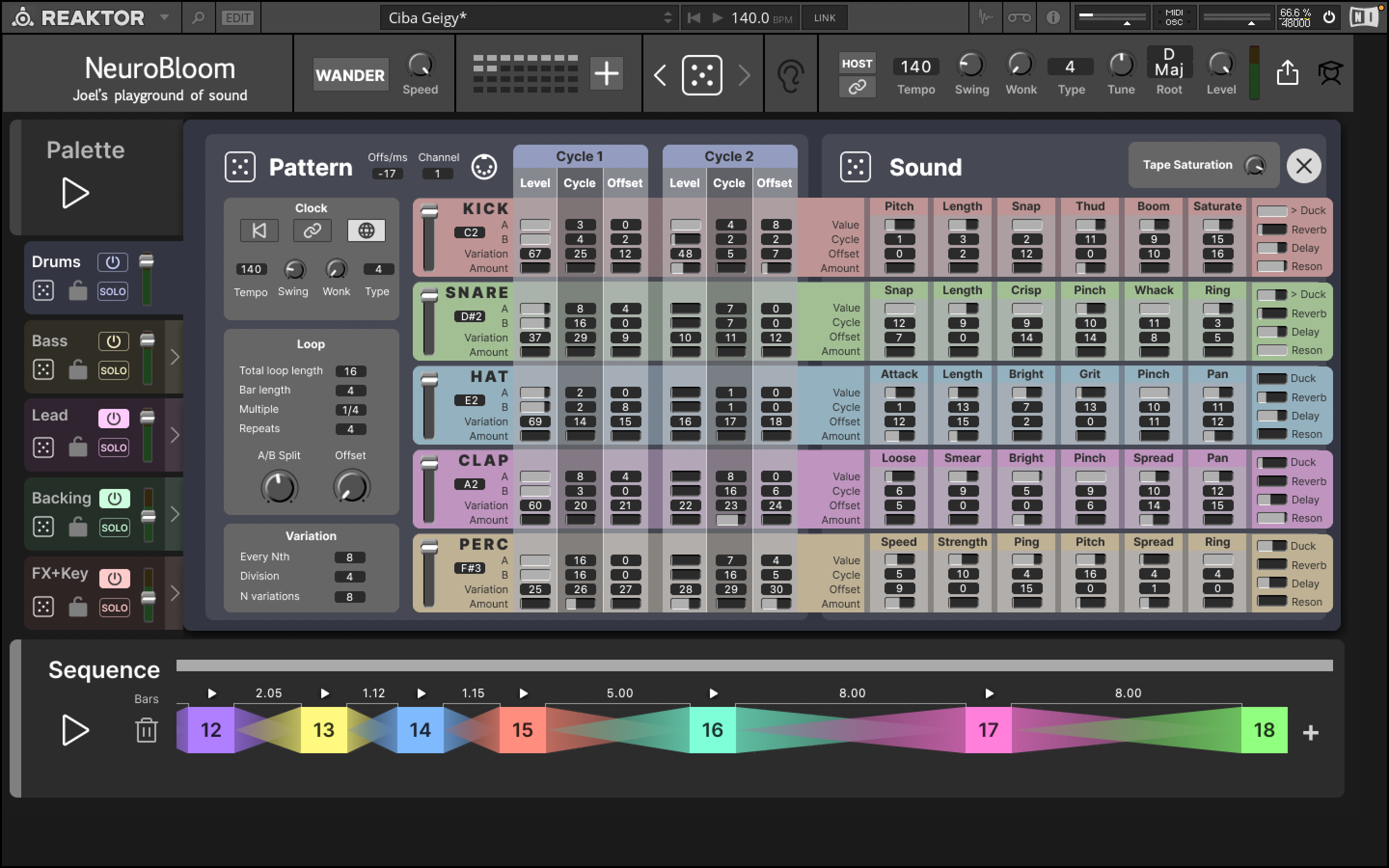
The tracks were born in a customised version of Tim Exile’s Scapeshift. Scapeshift is a rules based pattern engine that generates ideas and allows you to manipulate them in some pretty deep ways. I got under the hood and made changes towards getting shapes of patterns and phrases that really spoke to me (yeah, I changed the UI and the name to ‘Neurobloom’ just for fun so it felt like it was more me, but hey - credit to Tim for actually building it, I just hacked it up to do some different things).
As much as the pattern generators in Neurobloom are great, the synthesis engines just make everything sound, well, just like the music of Tim Exlie. Don’t get me wrong, they’re good - especially the bass synth, but it sounded like I was making someone else’s music. Even so, I could feel the potential in the patterns. I just needed to map them to my own sounds.
Neurobloom is a a Reaktor instrument, and as such doesn’t simply stream out MIDI that can be used easily in a DAW (in fact the first version didn’t do MIDI out at all). To separate midi across channels in Ableton Live, I built some M4L tools that extracted the MIDI signals and made it easy to split them across channels in Live. The devices even allow you to route the resulting audio from other plugins (or HW synths) back into Neurobloom for it’s mastering chain, which adds some real dynamic life and overall glue to the patterns.
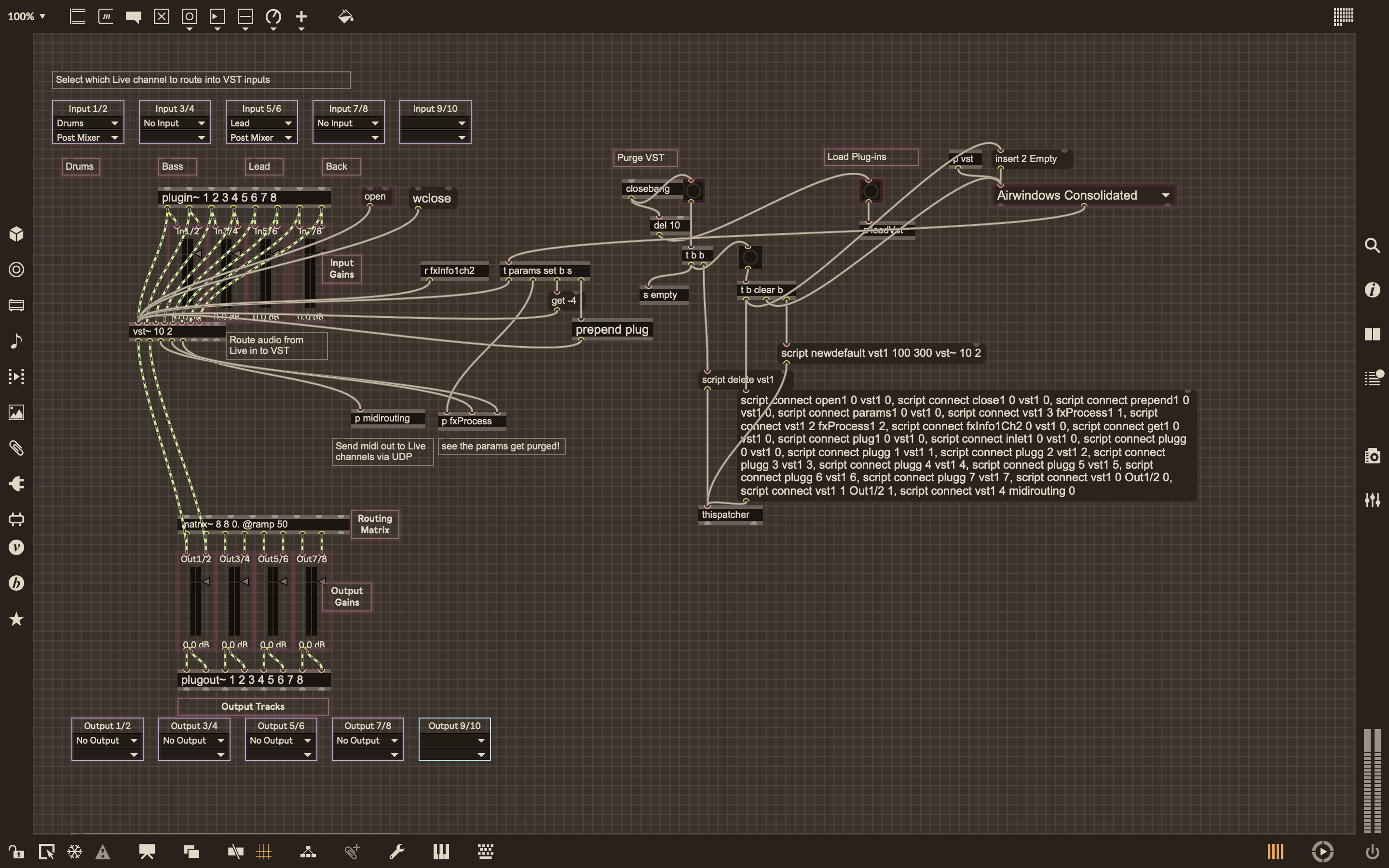
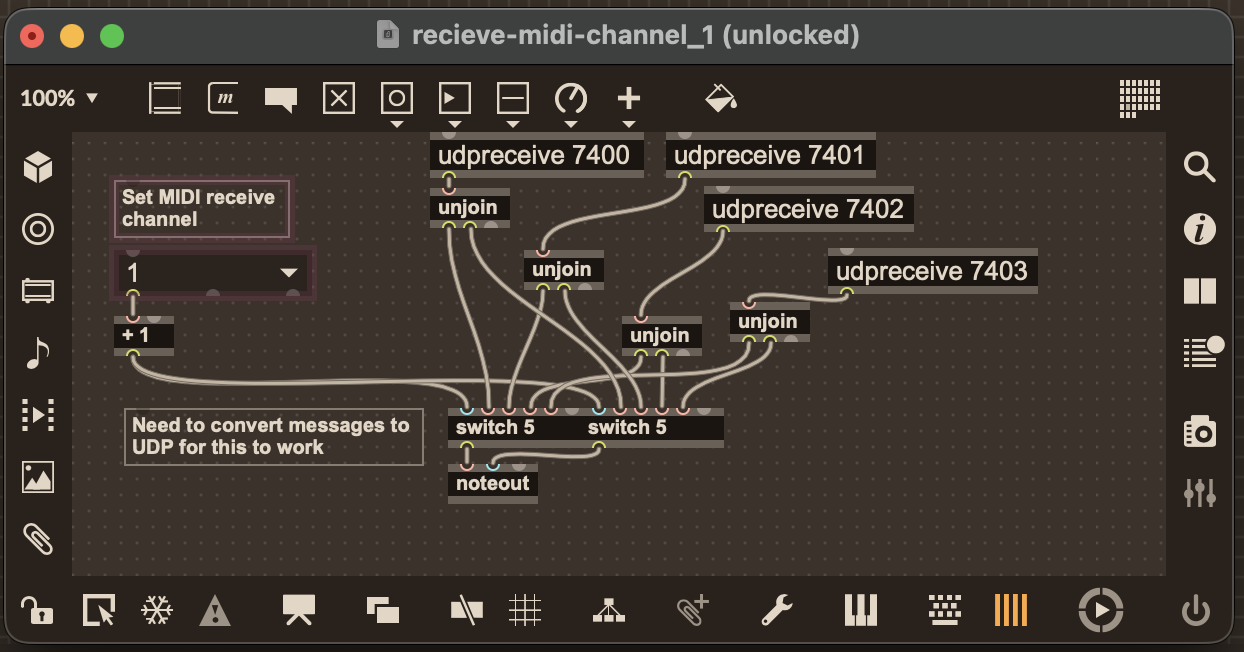
I loved this idea of everything in one plugin - generate an idea at the click of a button, edit the hell out of it, arrange variations of it, and master it - all in one place. So much so that I used this approach for Life - an app/plugin I’m making for crafting music through modulation.
An early version of Forward Motion Love, before the real sound design began and before I fell down the editing and automation well. The essence is here:
Pick a preset, move on
Once I had the MIDI coming into Ableton, I stayed in the box for the rest of the production - except for using my Behringer Model D for some bass lines when I wasn’t using the awesome Nisko bass synth.
I captured patterns, edited the hell out of the MIDI patterns, started applying different plug-ins for the sounds, and then got lost in automation madness (see Anchoress for this!).
I’m one for being guilty for spending forever in a plugin, tweaking endlessly for the perfect sound (and never often finding it) so I took a leaf from an interview with Four Tet I read, about his approach to production. I remember the revelation of him saying how he just doesn’t have the time (or interest) to spend dicking around tweaking synth parameters to the n-th degree, and in fact how he very often just scrolls through the presets and settles on the first one that fits. Well, I do like dicking around to the n-th degree but being on the lookout for new ways to finish things and not procrastinate I adopted this method quite a lot.
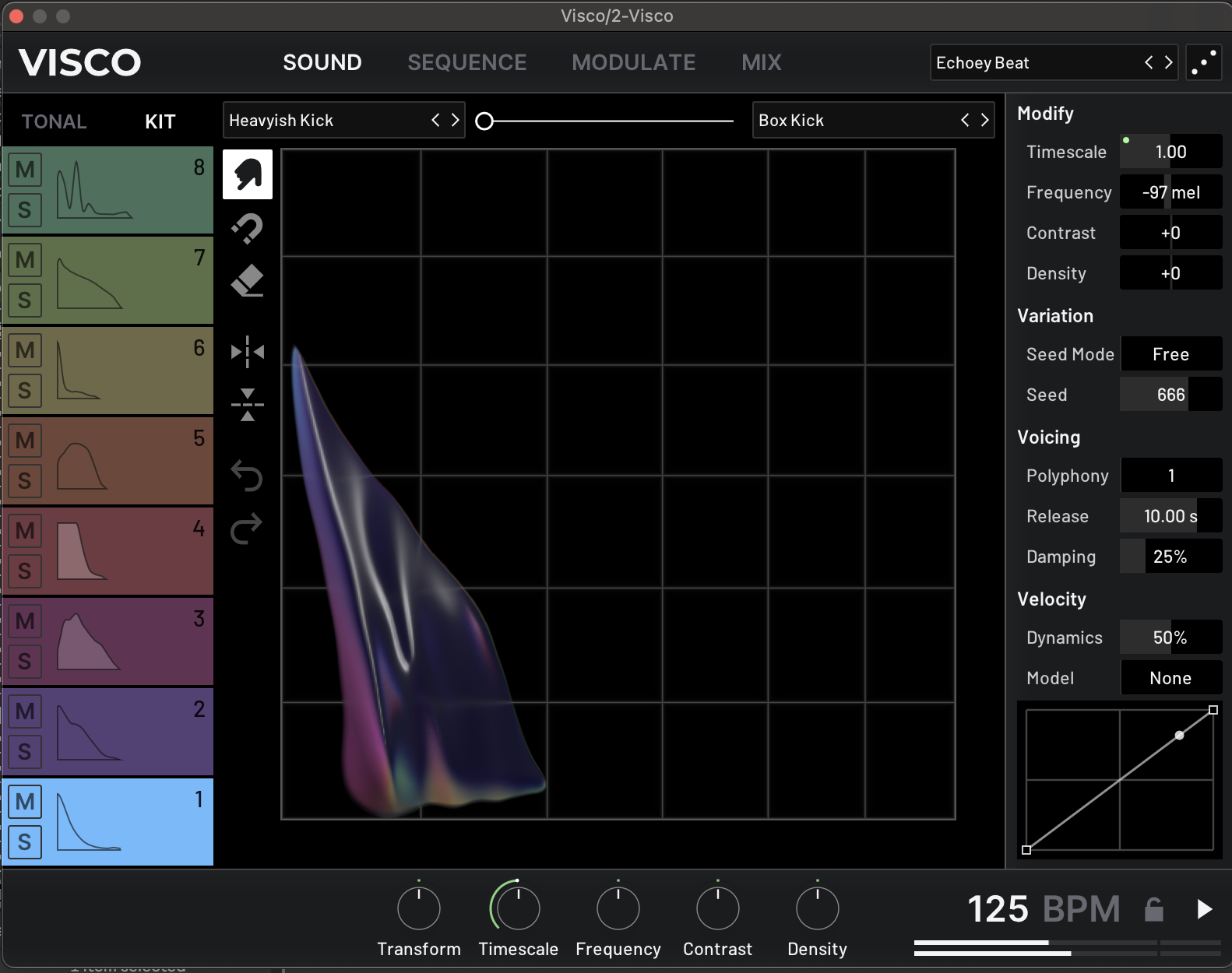
For example, the kit for the main drum beat in Marks of Weakness, Marks of Woe is a preset from the awesome Visco plugin (no relation to Nisko!). From memory, it was the first one I selected and it just worked. I extended the ‘find once and stick with it’ approach to the drum pattern on that track too. Aside from the ending part, I wanted a consistent drum pattern throughout - a total contrast to Anchoress or Before I knew this Place where the evolution of the drums is the driving force of the overall arrangements.
Getting over the arrangement hump
I get lost spending hours on finding an “essence” or a feel with a piece of music, but I lose interest on turning a couple of ideas into an arrangement. It’s really hard work and a separate skill that doesn’t come naturally (but funnily enough it find it easy when I’m doing it with someone else). I knew that this aspect would be the biggest barrier to finishing the tracks on Beyond, so I came up with a bit of a hack - lift and shift the arrangements of other people’s tracks and build mine around them. Easier than magicking an arrangement from thin air, but it was still hard work.
I used reference tracks that had no sonic semblance to mine as arrangement templates, but this was a total game changer to help me finish (and improve) what I started with. Can you steal an arrangement? Yep. Should you? Well, I’m pretty sure an arrangement (and by arrangement I mean ‘12 bar intro, ‘8 bar verse’ etc.) isn’t copyright protected (and neither should it be), and if you can tell which ones I based my tracks on then maybe I need to think again. But this was so liberating - it gave me a painting by numbers approach to getting tracks done, and I ended up adapting and extending things so much anyway that the arrangement changed shape so much by the end as each track cried out for its own nuances.
It momentarily occurred to me during this templating approach that this might be a candidate for automating and/or scaling, but at first the whole thing felt like a real cheat. So I didn’t give it too much thought, but four months on from the release of Beyond I discovered Color with Live - a tool that offers arrangement Stencils - color codes templates for Ableton based on real artists tracks. They sell templates for £8 each minimum - I missed a trick.
The edit-mix
Once the general arrangements were laid out, I things got pretty deep on the editing side of things - sooo much automation. For example, Anchoress was a pig, but I ended up mixing/mastering as I automated so there wasn’t really a final mixing stage per se - probably a side effect from going so deep with all of the side-chain compression, OTT compression and teasing out sounds to avoid the mud of chaos.
Vocals
Early on, I had earmarked both Marks of Weakness and The Sun and Her Worlds for some recorded vocals, as opposed to the samples I used in Anchoress.
I’m fortunate to have a pretty sweet vintage mic to get a good source recording but that didn’t mean I didn’t make mistakes. I’m also fortunate to have a Fiona Miller on hand to knock out some amazing vocals over an evening. But I wasn’t prepared for managing her 84 tracks of vocal layers after simply asking for “a few lines here and there for me to process”. But she never does anything by halves.
Giving Fiona my open-back headphones for monitoring her soft voice while they were cranked up gave me so much bleed to contend with, which is never fun to work with. One happy accident from that session though was the sound of my wife screaming at the whole family from outside the room - I pushed it up a little in the mix just to add a little subtle something at a point that could have otherwise gone stale. See if you can hear it.
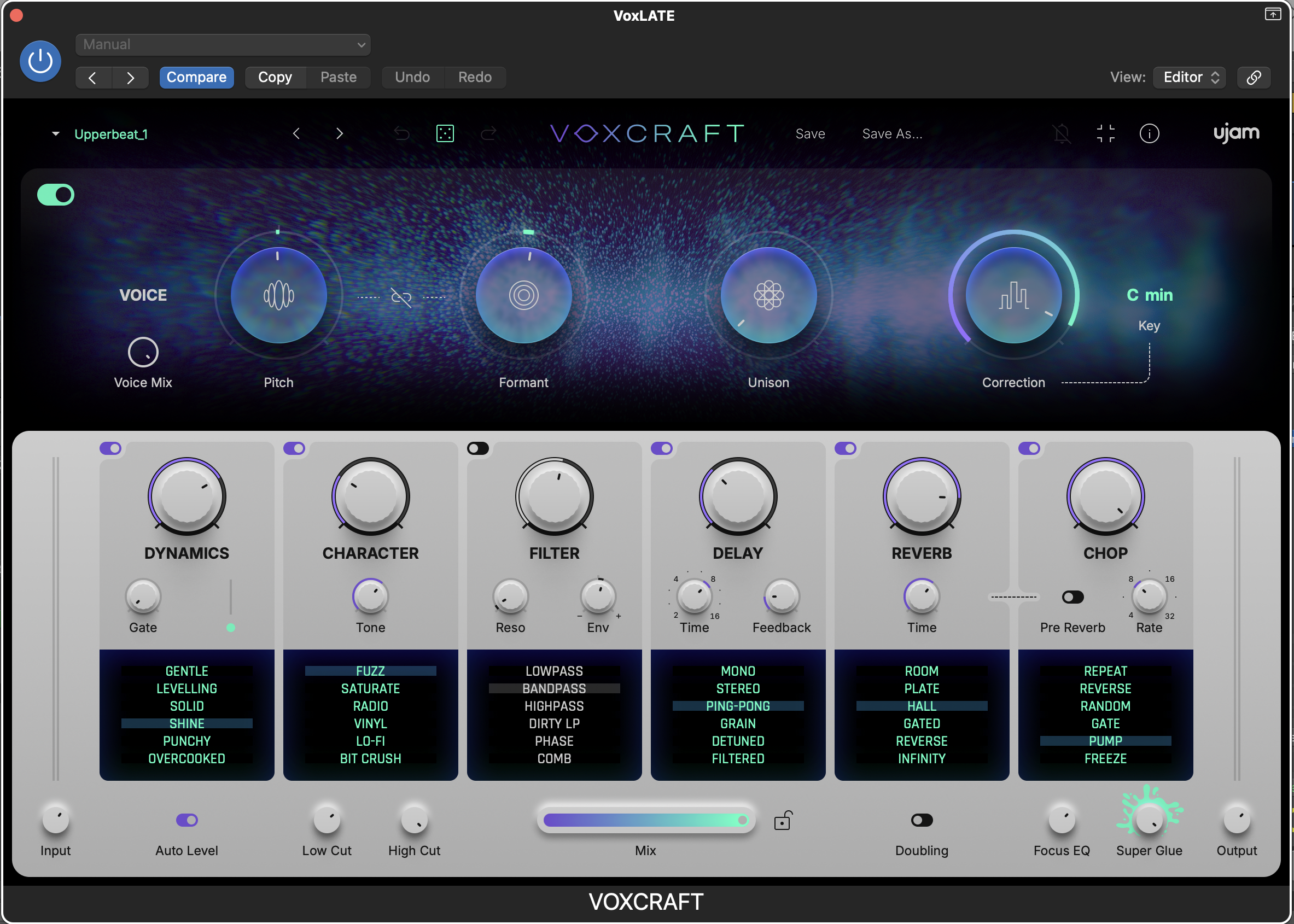
And in light of not having anyone else to record, I sang the vocals for Marks of Weakness. I’m no singer (outside of my mind) but without the awesome Voxcraft plugin for tuning my vocals would never have made the cut.
Hidden bits of life
I think it might have been the same interview with Kieran Hebden where I heard him talking about producing the track Skater. On it, there’s a swooshing sounds on this were from an iphone recording of his daughter skating on a frozen lake. He says how he often interweaves unprocessed field recordings into his music just to give it a human worldly quality.
I was really struggling with the sterile nature of Before I Knew this place so I dug into my hard drive of field recordings that I’ve captured over the years. Adding some ambience from the forest gave that track the touch it was really missed, and connected what I wanted it to convey with the real world.
I did the same for While Yet in Dust. Recordings of my kids playing a the swimming pool breathed life into a track that is primarily about the death of ideas.
New sounds need new tools
One aspect of creating this record that propelled me in new directions was getting stuck whilst teasing some of the ideas out of my head and then taking a step away to build a new tool to realise this. Totally in contrast to the “pick a preset and move on” approach, but some things just needed much more attention.
There was a specific texture to Fiona’s vocals on The Sun and Her Worlds that I just couldn’t create with my existing plugins or any new ones I tested out. Output’s Movement was close in concept, and I suppose I could have combined it with some other tools, but when I spent some time thinking about it I had the design for the processing come together in my mind. Out of this came Orbit, a granular-tremolo type effect that moved and blurred the vocals together at the same time.
In contrast, sometimes new sounds need old tools. For the vocals in the second part of The Sun and Her Worlds, I went old school; mapping regions of Fiona’s vocals to keys in Logic’s basic sampler and then playing them on my keyboard. The arrangement of the second half was recorded in one take - me playing along on my MIDI keyboard triggering samples of her voice as it passed through Orbit.
Other new tools were born from this record. Tides came from my attempts at emulating BBD-style resonant synth techniques in Max. Such synth sounds underpin some of the key synth parts in Beyond. So after I finished the record I went all out and built a standalone BBD emulator, AKA Tides.
Life came from an idea I had when making Forward Motion Love. I spent a lot of time automating the inter-track modulation chaos and at one point thought, “why isn’t there a tool that centres a creative workflow on this?”. Turns out, because it’s kind of nuts. And Life became a monster of a project to get into a good state - as of right now I’m still working on it.
Having these directions that sprung from making Beyond actually gave me more impetus to finish the record. I had other stuff to dive into and just wanted it done. And I found out new ways of pushing things forward - memories of selecting a friend for some early feedback of a track who simply “too much”. I fully understood this and spent that night completely rearranging it in an Albanian hotel room late at night. Throwing away the entire vocals for Marks of Weakness after too many iterations on the mix and then laying down the final take in about 10 minutes the next day.
There’s no such thing as finished
Finishing isn’t really finishing, and actually, I think that’s the point.
Beyond the Beyond has an end point now. It exists as a record, rather than a collection of things I’ve been meaning to get back to (see my hard drives for years of this). But the process of making it didn’t really end there. I’m still working on Life. Life opened the door to exploring BCMI control again, an area I hadn’t touched for around eight years, which has in turn got me writing new brainwave mapping software. So now there’s another rabbit hole to disappear down. Watch this space.
There are other tracks too. Things I’ve made over the years that might still see the light of day, particularly some of the stuff that sits somewhere around the same territory as this record. It’s funny looking back. Stuff that never felt finished at the time, feels finished listening back now. Sometimes finding the essence does outweigh a flashy arrangement - actually sometimes that’s just what music is. I remember spending forever making this, crafting an essence but caring very little for the final arrangement:
And maybe that’s what I got wrong about finishing in the first place. I don’t think finishing something means deciding that you’ve exhausted it, or that there is nothing left to explore. You can’t really do that. There will always be another sound to try, another arrangement to pull apart, another idea that sends you off in a completely different direction.
Finishing is just choosing an end point.
Having an end point gives all the tinkering somewhere to go. It creates a bit of pressure, a bit of closure, and, importantly, a sense that you’re actually moving forward rather than endlessly circling around the same ideas. It turns something that could exist indefinitely into something that exists.
And then you can start again.
I haven’t become any less interested in tinkering or exploring. If anything, making this record has given me more things to tinker with than I had before. But that’s why every so often it’s probably worth picking a point, calling it done, and seeing what happens next.